Featured

Department Literacy Reps – creating your very own Literacy Army!

(Tea and biscuits certainly help with the recruitment process!)

So I’ve recently come to the enlightening realisation that I can’t possibly create my literacy vision on my own (even though I’ve tried!) and I need to delegate/recruit comrades! I also came to the conclusion that I have no idea what the literacy requirements are in each subject – does the Art GCSE exam paper have a SPAG mark? Are students confident with exam command words in Maths?

Where to start? The idea of creating Literacy Reps for each department seemed like the obvious idea to get the answers to all my questions, but how to get them? I mean, we all know that there’s a traditional feeling amongst many a teacher that Literacy is an “English thing” – why does a Maths teacher need to bother with spelling? When do PE need to teach etymology in their football lessons? So in that sense, recruitment was the biggest battle. I initially emailed Heads of Department asking them to nominate someone under the premise that it would be very little workload and of course, there would be refreshments! I got a majority of nominated reps straight away, however some departments it’s been like drawing blood from a stone….

So how do we overcome the barrier of colleagues not valuing or realising the importance of literacy in the subject? With hard core research and data of course! (Numbers are always very persuasive…) Luckily enough, GL Assessment produced exactly what I needed last year, in their ‘Why Reading is Key to GCSE’ report. It’s as if they wrote it specifically to help me convince my colleagues that in fact, literacy isn’t just for English Teachers (Thanks, GL!) I’ve attached it to this post for handy reference.

What is so great about this report is that it clearly shows the direct link between reading age and GCSE outcomes – something which even Maths teachers can’t ignore!

Step 2 – once you’ve got your recruits it’s time to arrange the first meeting (don’t forget to book those all important refreshments!) My first Reps meeting was deliberately short – I simply summarised the importance of literacy in all subjects, explained the link to GCSE outcomes and school priorities. I then left them with Subject Literacy Audits to complete for our next meeting, so not too painful really.

Then comes along Covid, lockdown and school closures…… (the less said, the better).

And now here we are in Summer Term of what has been a pretty crazy academic year. I think we now need Department Literacy Reps more than ever as the impact on reading ages due to school closures has been detrimental. My priorities now are to get all students tested on their reading ages (we use NGRT – another great tool from GL)

I met with my Literacy Army (they don’t know I call them this!) just a few weeks ago, and I shared the EEF seven key recommendations for improving literacy in secondary schools, which also comes in a handy poster format for quick reference. I then used this as a basis for a survey I created on Forms, asking them to write reflective comments on how their department/subject currently meets each target and what support they might need. Here’s the Forms if you want to use it: click here (let me know how you get on!)

So that’s where I’m at currently – I suppose next steps are regular meetings with the comrades to keep Literacy front and centre, and to really get prepped for launching my ‘Reading Rich’ curriculum next year. Other things on my radar is incorporating subject reading homework, and spellzone, a website that has pre-created vocabulary lists that can be personalised for each subject.

This is an ongoing mission for me, so I will keep you all updated! Please let me know if you do something similar in your own school and if you’ve been successful.

Over and out, comrades!

Featured

World Book Day – an excuse for fancy dress!

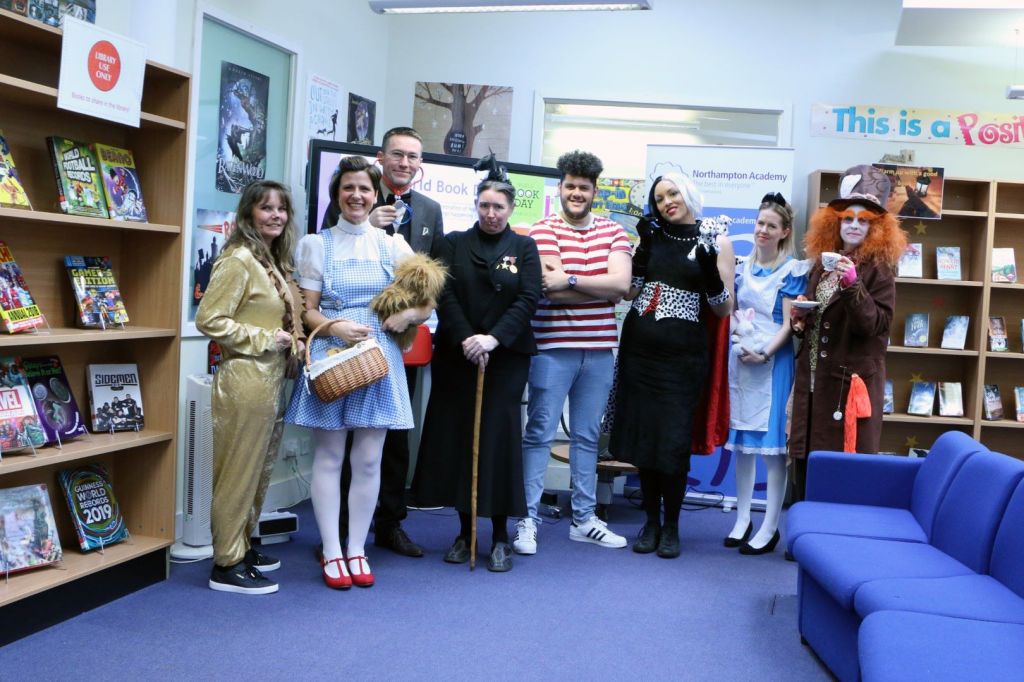
Ah, World Book Day….possibly every English teacher’s favourite day of the year. And of course, an excuse for fancy dress, something which I haven’t been able to get away with since my uni days. But how can we make the most of it – to maximise its potential in encouraging our students to love the wonderful world of reading for pleasure? And it’s not just as easy as getting them to laugh at my attempt to pull off Katniss Everdeen…..

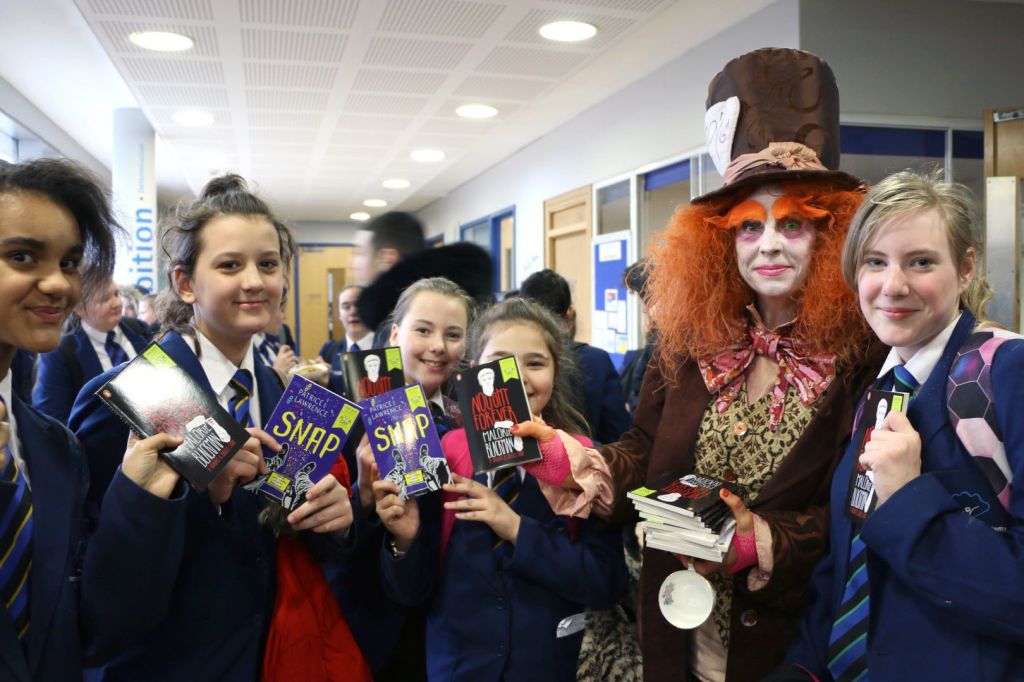
It seems that World Book Day is largely celebrated in primary schools and merely acknowledged in secondary schools. However, I’m now lucky to work at a school that throws everything at World Book Day and I couldn’t be happier (did I mention my love of fancy dress….) Last year was my first experience and I was amazed by the amount of staff that dressed up, and not just English teachers. We also have a fab librarian who goes around the canteen at lunch time giving out free copies of the £1 books – there’s a real buzz about the place. We also get a short story read out over the tannoy – separated into 5 parts, with each part being read at the start of a lesson.

Last year I also ran two events in the run up to WBD. Firstly, I launched Readathon in the January, giving students until WBD to collect their sponsorship money. Read for Good are a charity that raise money to provide brand new books and story tellers to children in hospital – a very worthwhile cause that fits in with our Character ethos. It’s very low effort but high impact. I go into assemblies to launch it and show their promo video via YouTube which is very inspirational. I then ask my English colleagues to hand out the forms to all students in their classes. Of course, what I’ve found out is that just because you ask something to be done, doesn’t always guarantee it will get done. That’s one huge lesson I’ve learnt since starting this role. It can be frustrating and heart breaking when you still see all the forms sitting there a week later. But I’ve come to realise and accept that it’s not personal. Teachers just don’t have time. And I can relate to that. We’re bombarded with tasks every single day and I can totally understand that handing out a form isn’t on top of that priority list. My workload sometimes feels unbearable too (I’ll do a different blog on that soon…) However, I need to make sure these events are successful, so it’s a tough one.

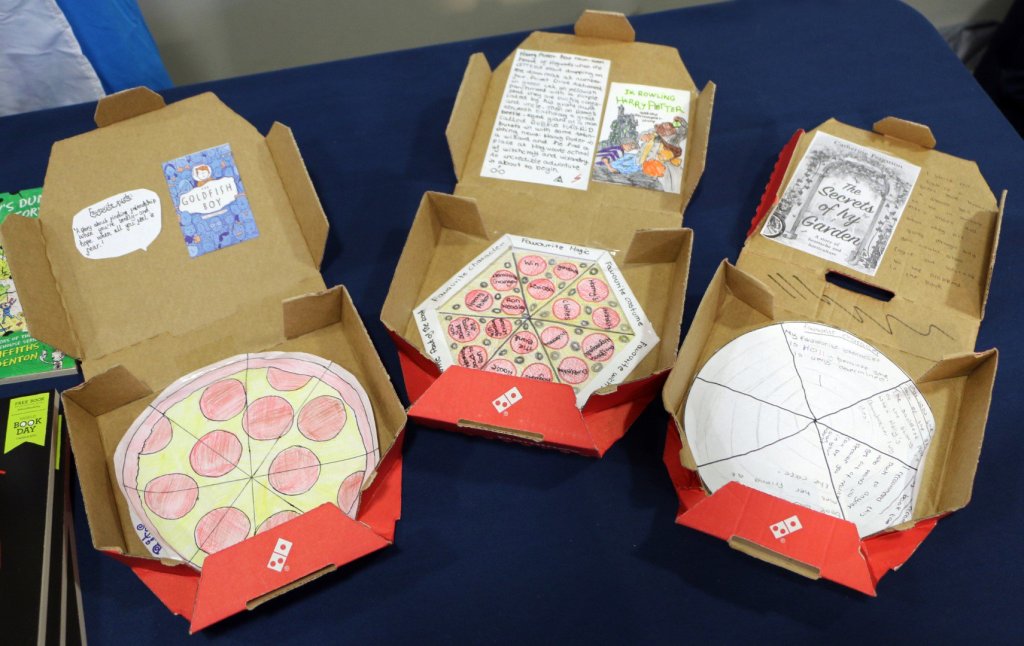
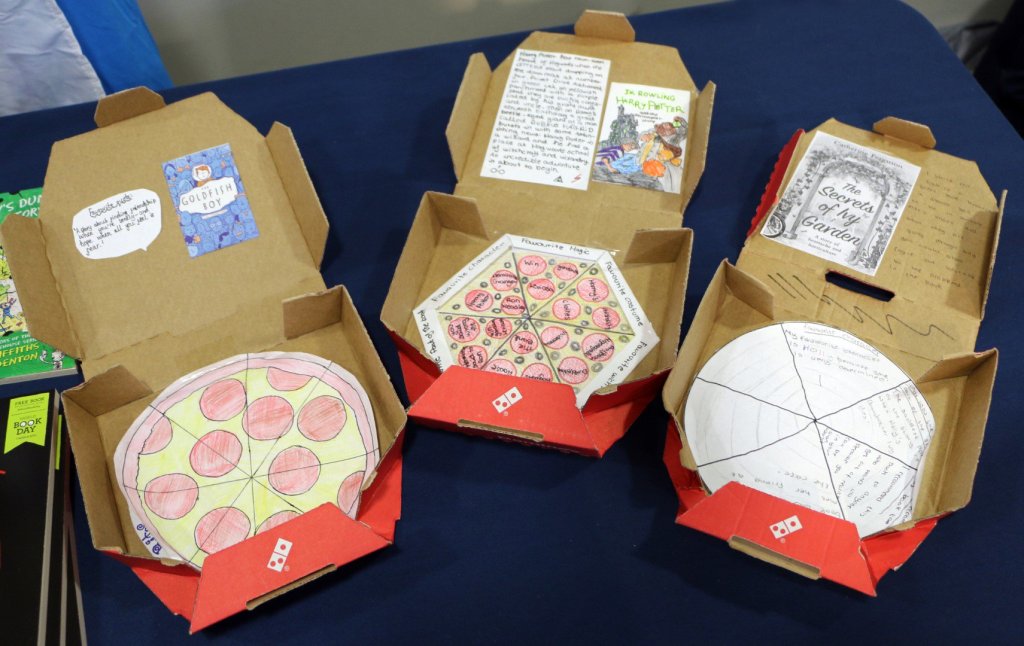
I also ran two competitions in the run up to WBD. I discovered the ‘Pizza Box Review’ via Pinterest and thought it would be a really fun and creative way to get students to share what books they’ve been reading. I even got our local Domino’s to donate the pizza boxes and a gift voucher for the winner! (Never underestimate the power of asking for freebies – I do it all the time!)

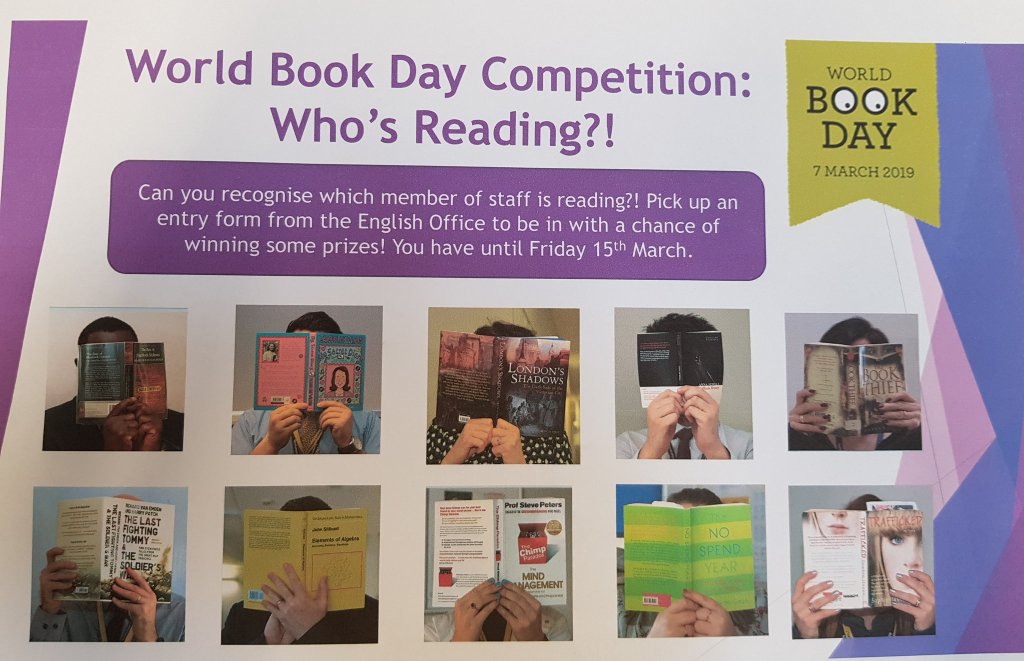
The other competition was ‘guess which teacher is behind the book’ and I created a page of photos of staff who obscured their faces with the book they were currently reading – lots of entries and the winner was announced on World Book Day.

So now I’m thinking ahead to this year’s World Book Day – is there anything more I/we could do? I’ve already launched Readathon (and again the box of forms is still half full…) and I plan on doing the pizza box review again. But I’d like to do something else. I want to do something genuinely whole school. Something that actually makes the students want to read. And I’m thinking….perhaps giving students some famous opening lines to novels, those lines that are so intriguing, you just have to continue reading to find out what happens. I think it might work!

Would love to hear what your plans are for WBD this year. But more importantly – who are you going to dress up as?!

Featured

Creating a ‘whole school reading’ ethos: Part 1

When I was tasked to create a ‘whole school reading’ ethos back in April 2018, I initially thought I would need super hero powers! Whilst I’m into my second year, and have achieved many successes, I still sometimes feel like I could do with a little bit of supernatural help!

So, let me take you back to April 2018. I had the summer term to prepare the launch of our Tutor Reading Programme in the September and also to create a positive whole school approach to reading – easy peasy, right?! I’ve never seen a ‘to do’ list so astronomical! Fortunately, I was able to visit a school where a Tutor Reading Programme was already running smoothly with some great measurable impact on students’ reading ages. It was a much smaller school though, 600 students in comparison to our 1200+ and it was a bit of a mathematical nightmare for me working out the amount of books to order! (Numbers are definitely not my strong point!) We also ran it slightly different, with SLT deciding only Years 7-10 would take part and for 3 mornings per week – the other 2 being dedicated to PSHE and assemblies. I was slightly concerned that 3 mornings per week would not be enough consistency for students to follow along with the book – but it was better than nothing, and having seen it run successfully, I was sure the programme would have the same positive impact in our setting. So I set about putting it into action.

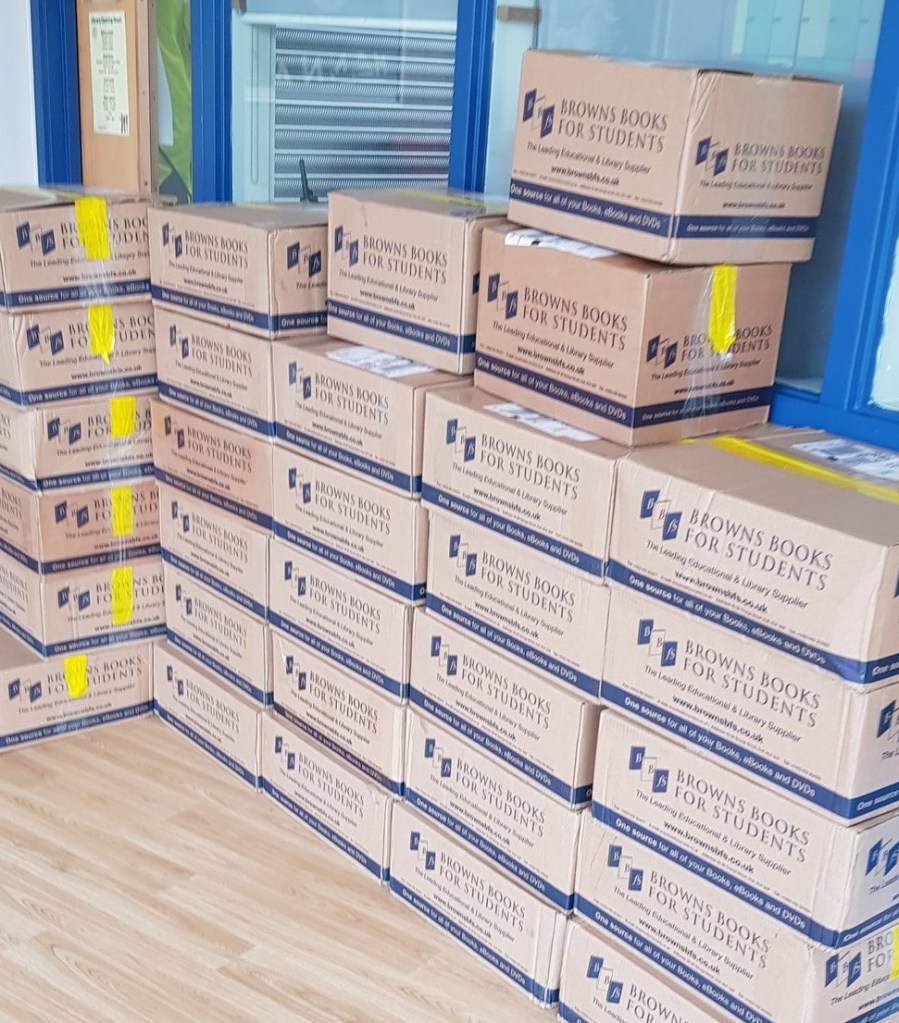
And then the books arrived! I’m not going to lie – this took me a solid 2 days during the summer holidays to unpack and sort out! Not sure I’d ever seen so many books in my life! It was very exciting but very daunting and I knew that I’d have to set up some sort of tracking document as these books were a huge investment from the school and needed to be looked after. (One of the many ‘bugbears’ of this part of the role – much of my budget unfortunately goes on replacing missing books.)

I also had to create some staff guidelines and prepared a presentation for all staff to be delivered during the September training days. Importantly, this initiative was highly prioritised by SLT, meaning I felt staff took it more ‘seriously’ as a whole school priority. Not that I doubted myself or the programme, but for someone who suffers from ‘imposter syndrome’ it was definitely comforting that the principal ‘had my back’ as they say.

Of course, the book choice is vital for making this programme work, and I mainly used the book list from the school I visited as they seemed to be well liked. I also made sure there was one non-fiction book and one pre-19th century text to fill the ‘cultural capital’ quota I’d been given. With more students reading, we needed more sets of books, so I consulted my fellow English teacher colleagues and fabulous librarian for some recommendations. We have some great books and some personal favourites including ‘Chinese Cinderella’ (which I remember reading as a child) ‘The Boy in the Striped Pyjamas’, and some great contemporary non-fiction which I don’t normally read, but particularly enjoyed ‘Mud, Sweat and Tears’ by Bear Grylls with my own tutor group (my tutees enjoyed it too!) Another highlight of our book list was being able to choose titles that fit in well with our Character Curriculum ethos, meaning many of the books showcased our core values of respect, determination and ambition. I mean, I’m not going to take all the credit, but we did get the ‘School of Character’ kitemark in the same year as the Tutor Reading Programme was launched! (Second school in the country to be awarded with it, might I add!!)

The programme has been a great success and a major part of that has been down to tracking the consistency of it – on a daily basis. SLT members are on duty every morning and monitor Tutor Reading thoroughly – making sure students follow along with bookmarks (a great visual method of making sure students are reading along, and not just listening – our principal’s favourite phrase being “it’s not a Tutor Listening Programme!”)

The tracking document works well (mostly!) and staff tend to stick to the 2 days notice period of needing a new book – although there’s always some mornings when a student arrives at my desk requesting a new set after registration has already started! A few other teething problems that arose was staff confidence with reading. We have dyslexic staff, MFL teachers who aren’t native English speakers, and staff who just aren’t confident at reading aloud. However, this was solved by creating a buddy system – where members of staff who aren’t tutors pop in one morning a week to do the reading. We’ve also extended it this year to provide a leadership opportunity for our Sixth Formers. We have well over 15 Sixth Form students who read regularly for tutors once a week, and also help with monitoring students’ usage of bookmarks – a great support for our teaching staff and a great way to build staff/student relationships with our Sixth Formers.

Another element launched this September was the Knowledge Organiser – a phrase that now fills me with dread! Each book – yes, all 37 of them – has its own accompanying knowledge organiser, all made by me (hence the dread!) In fact, it reminds me of that non-fiction book I read with my tutor group – ‘Mud, Sweat and Tears’! They certainly were a chore to make but the value they’ve added to the programme has been immense. Each one has pre and post reading discussion questions, author background, plot overview and context information. There’s also a key vocab box – something vitally important for introducing students to new sophisticated vocabulary. Staff and students have really welcomed them, particularly the discussion as it allows the tutor group to really explore what they are reading. And with that in mind, this January I’m launching ‘Habits of Discussion’ cards to accompany the Knowledge Organisers, which have sentence prompts/starters to help students scaffold their verbal responses in a more sophisticated way. So with my Literacy Co-ordinator hat on, this is a double whammy in exposing students to more sophisticated vocabulary along with oracy skills.

So, if you’re thinking of launching a Tutor Reading Programme in your school, I’d say – do it! It’s a lot of logistical work and you need the support from SLT to make sure everyone ‘buys’ into it, but the outcomes are amazing. Our student reading ages have improved massively since its launch and student surveys are telling us that they are enjoying being read to every morning. And as a teacher – of English or not – what better way to start the day?!

– Check out my resources page soon for Tutor Reading Programme resources, including book lists, tracking documents and knowledge organisers

– Stay tuned for Part 2 where I talk about other strategies to create a ‘whole school reading’ ethos, including LitFest and Summer Reading projects

Featured

My First Blog Post

Be yourself; Everyone else is already taken.

— Oscar Wilde.

So I’ve taken the plunge and set up my own blog – seems like all the cool kids are doing it these days, and I’ve seen a few good ones via twitter. I think it’s much for my own use as it is for others. I’m on a journey and I’m hoping it might be useful for others on a similar flightpath.

I’ve been promoted to Literacy Co-ordinator this year (although I’ve been in touch with a colleague at a local school whose job title is ‘Director of Literacy’ which sounds far more snazzier and I totally want to pinch it!) and also been recently recognised as a ‘Subject Ambassador’ – a new role created within my Academy Trust, and what better way to start that role than creating a blog where I can share ideas, experience and resources with others.

So please keep in touch and I plan to stick to my life motto of – ‘sharing is caring’!

Read for Good – why all schools should get involved

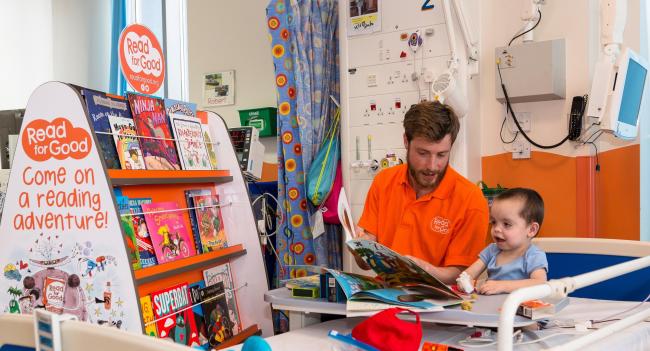
If you’ve seen any of my twitter feed, you’ll see that I regularly tweet about Read for Good – an amazing charity I discovered last year when embarking on my role as Literacy Coordinator & Reading Ambassador (still the coolest job title in all the land!)

In a nutshell, it’s a sponsored read. However – it’s so much more than that. I remember watching their promo video for the first time and was surprised by the emotional impact it had on me. Only then did I realise how powerful and important their work is.

Just watching children in hospital is enough to pull at anyone’s heart strings. But what hit me most was the pure joy that Read for Good bring to these young people and their families at such a difficult time in their lives. We all know how important reading is to the average student – but to these children in particular, it gives them such an incredible gift.

So of course, I signed my school up straight away! What better way to promote the importance of reading than for students to see the wonderful outcome their money will achieve to those less fortunate than them. It also fits in perfectly with my school’s Character Values – win win.

I have to take a moment to say, that the most noticeable thing about Read for Good to me is their fantastic staff and support. You ring the contact number on the website and someone answers the phone – straight away! No dialling 1 for this and 2 for that – but a real live person. And they are always super helpful and knowledgeable, which is precious for busy teachers like myself.

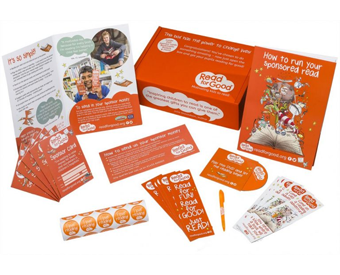
You can simply request your Readathon pack from their website to be delivered during the term you intend to run it. They send you lots of useful goodies along with the sponsorship forms and bookmarks (I mean, what teacher doesn’t love a free pen?!) And you’re pretty much good to go.

Their website has a fabulous resources section wit everything you need to make your Readathon a success – from posters, to letter templates, to bunting!

When I chose to run my first Readathon, I decided to coincide the deadline with World Book Day as it seemed like a good way to celebrate how much money we had raised on the day where our whole school community was sharing a love of reading. And in that first year, we raised over £200! I’m now looking forward to running it for a second year.

Here are my top tips to make Readathon a success at your school:

  • Get your pack in plenty of time ready for the launch
  • Go into assemblies the week of the launch to get the message delivered to all students
  • Get the support of your English teacher colleagues and ask them to hand out forms in their lessons
  • Send letters home so parents are aware
  • Promote heavily in school – posters, school social media
  • Keep reminding students to take part
  • Link to World Book Day to make it a celebratory event
  • If there’s anything you need/questions – call the fabulous Read for Good team!

I can’t emphasise enough how strongly I feel that schools should take part in Readathon – it’s reading for all the right reasons. With my Literacy Coordinator hat on – it’s easy to see the positive impact this has on students’ attitudes to reading. But as a human, it’s just amazing to see children wanting to do something good for other children – and what’s more amazing than that?

Lit Fest – the best (and worst) week of my life!

This image sums the week up perfectly – the joy and light that books bring, but also the fact I spent most of the week in bed exhausted! I’m not going to lie – LitFest was perhaps the most stressful week of my job so far, but also the most rewarding.

Our KS3 Lead set the whole event up, then left me to it whilst she went on maternity leave! “It will be fine”, she said, “You’ll enjoy it” she said…! Little did I know that it would blow my ‘To Do’ list completely out of proportion! But don’t let me put you off, this blog post is actually designed to encourage you do to something similar in your own school, and hopefully learn from my experiences so it runs as smoothly as possible for you.

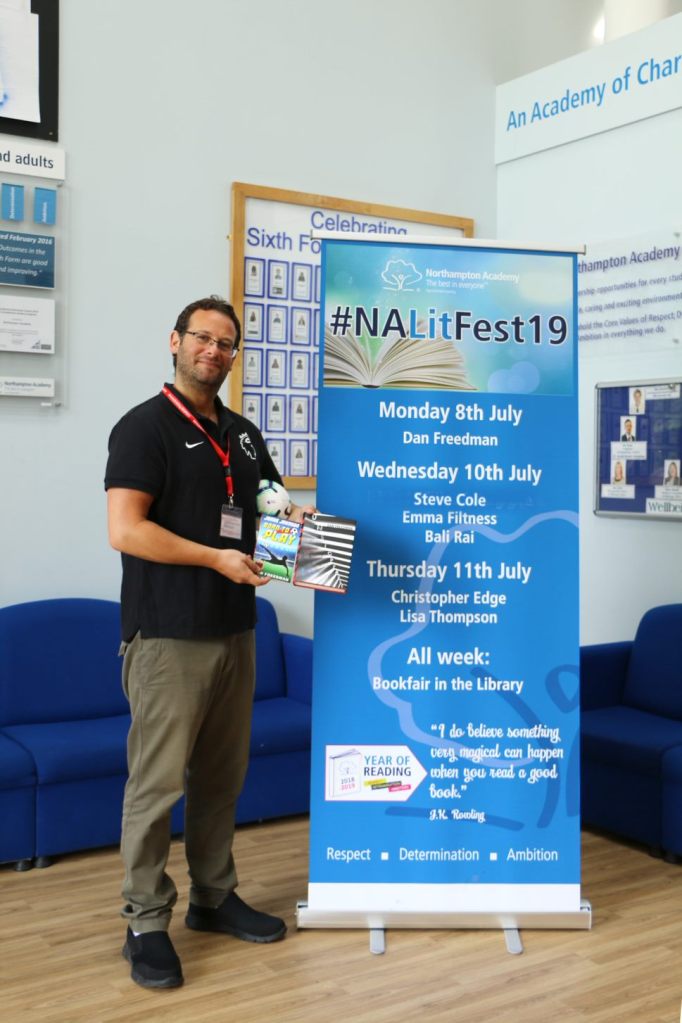
So where to begin…..what actually is LitFest? Well, it’s a week long literary festival (that I nicknamed LitFest as I thought it would sound good with a hashtag….#LitFest…..cool, right?!) It took place in the summer term so all the exams are out of the way and was designed to celebrate all things literary. Sounds easy, right? Luckily for me, my colleague had already done all the paperwork in terms of getting the event approved, sorting out the budget and booking all the authors. All I had to do was to ensure it ran smoothly. And did it…..? Well, I’ll use that age old metaphor of the swan: on the outside everything seemed calm, but underneath the water the swan (me…) was working and panicking furiously!

You can’t begin to imagine the logistics of a week-long school event. We had over 5 different authors during the week delivering whole year group assemblies and workshops with various groups of students. Yes, the schedule was done for me, but I had to organise getting students to the hall, inviting students to workshops, telling teachers where and when to send students, coding it on SIMs, sending letters home to parents informing them their child was attending a workshop etc. The list of jobs was endless. So I did the only thing that any decent teacher would do. I bought myself a pretty notebook! Obviously this would help me to be more organised…

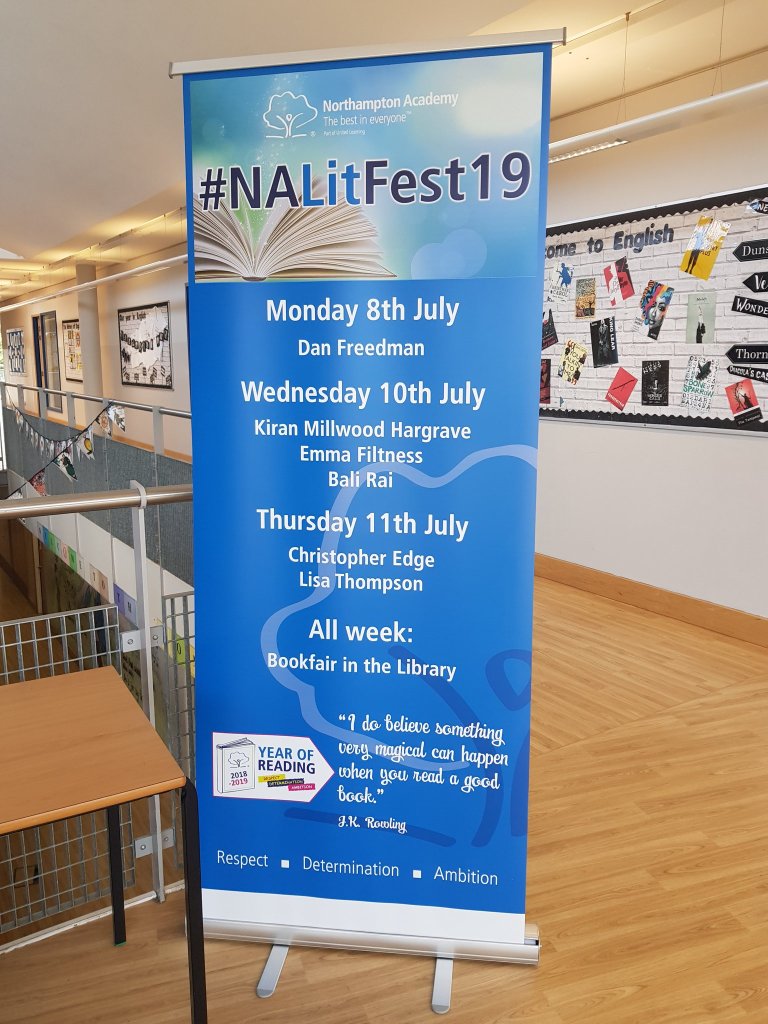
I also did a lot of work promoting it and with the help of our fabulous marketing lady, we created some fab posters, a logo, and a banner. I was so proud of how good it looked. (But of course, even with my pretty notebook to keep me organised, I completely missed off one of the author’s names – sorry Mark Grist!)

I used the school’s twitter as well to build momentum, tagging the authors who were taking part as much as possible (I’m a huge fan of twitter). I got posters on every classroom door and sent a letter home to parents.

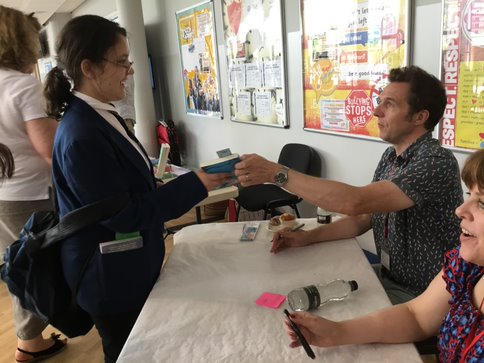
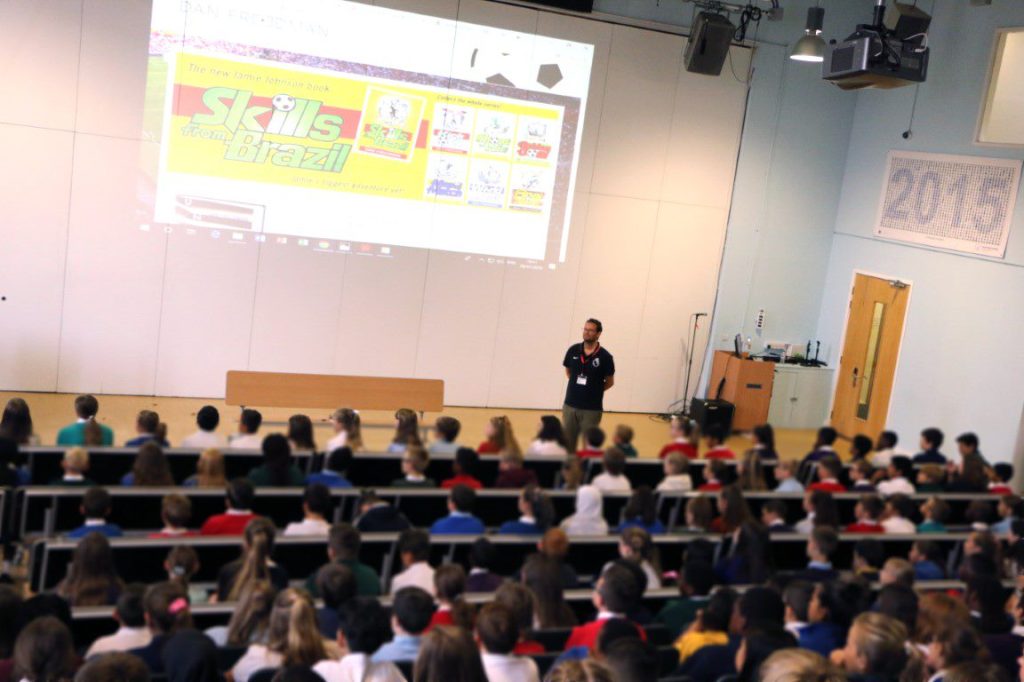
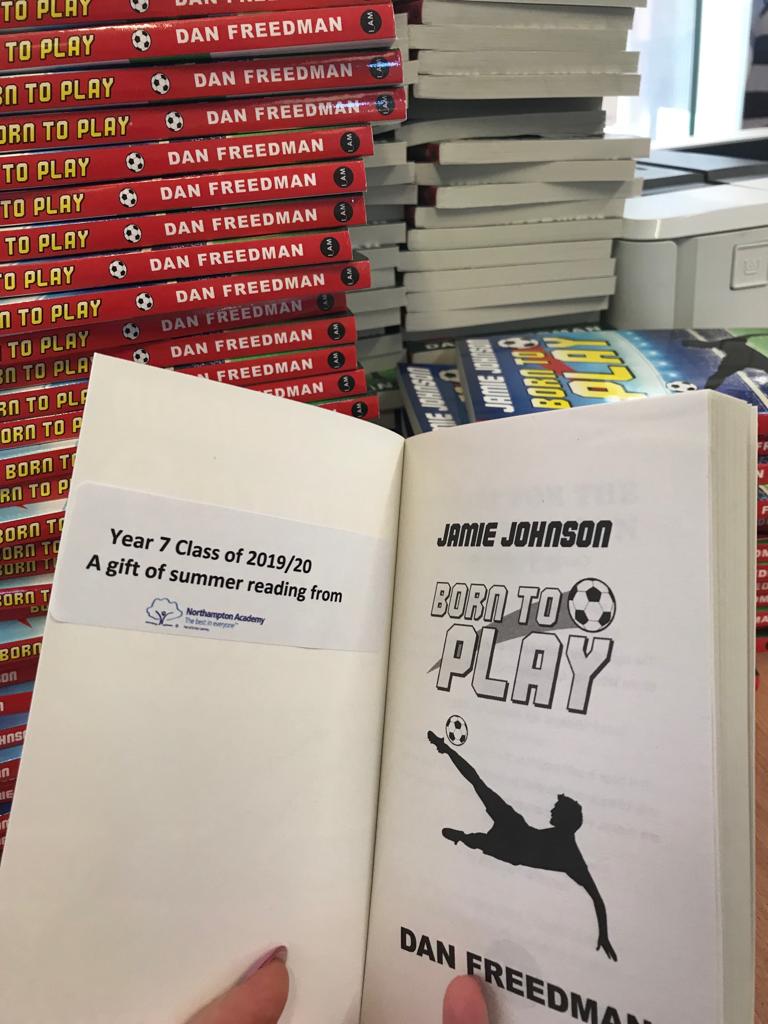
Due to the timing of the event, it meant the first day of the week was also our Year 6 Transition Day, so our first author – Dan Freedman – delivered a talk to the whole cohort and each student received a free copy of one of his books in an envelope with a letter from me detailing how we strongly value the importance of reading at our school, along with a book review poster for them to complete and bring back with them to share in September. I think this is a really valuable message to share with our new students (and parents) to help promote reading.

So, when the week arrived, I had my schedule printed out for each day and sent reminder emails to those staff involved in bringing students to the hall. I’d booked refreshments and a room to meet and greet the authors. Unfortunately, I couldn’t get cover for the whole week, so I had to rely on colleagues to do some of the meeting/greeting and staying with authors during workshops. I had the timetable for the week printed on A3 and displayed above my desk. I felt ready for what was about to come.

There were, of course, a few hiccups – the biggest being that 2 authors, yes TWO authors pulled out a couple of weeks before the event (stress levels most certainly piqued at that point!) – For some reason, students got mixed up about which workshop they were supposed to be attending, our Book Fair people ended up in the canteen, rather than in the library. And yes, I went home exhausted and mentally drained at the end of each day. But do you know what? Seeing the entire of Year 8 completed engrossed by Mark Grist’s performance rap poetry, having a disengaged Year 10 lad tell me that he’d written something he was proud of, watching Year 9 students attempt erasure poetry and taking it home to show their parents – made it all worthwhile.

Am I doing it again this year?

You bet I am! I will definitely learn from last year’s experience and I’m currently in the process of writing this year’s proposal. There are authors I want to rebook, and some new talent that I’d like to take part – also hoping to link into our Character and STEM specialisms. I also want to make sure that all students are involved in some way. So just a small To-Do list then?! I think this calls for a new pretty notebook……!

Here are my top tips if you want to run a similar event at your school:

  • Plan well in advance
  • Choose authors that are relevant and engaging for your setting (and tap into those budgets! Pupil Premium etc. as the costs soon start to mount up)
  • Book it into the school calendar and give staff plenty of notice
  • Draft letters ready and then adapt them to the different workshops
  • Get your admin team onside to help you with distributing the letters for students/parents
  • Start promoting early – use twitter where possible so you can tag the authors and then they can retweet to help with publicity
  • Create a daily schedule – especially if you are delegating tasks, make it clear what needs to happen where and when
  • Be prepared for things not going to plan – and try not to worry about it too much
  • Make sure you follow up with students to continue their interest and engagement – don’t let it become a ‘flash in the pan’
  • Most importantly – enjoy the experience with the students
  • Oh…and buy yourself a notebook!

Using Tutor Reading to Develop Oracy – Win Win!

With the success of our Tutor Reading Programme, comes constant progression and development to add even more impact. We all know the importance of reading – but what about the importance of oracy?

This is something I’ve been working on. I think as classroom practitioners, we value discussion in lessons as this can help students to verbalise and solidify their ideas before writing them down. In fact, I’d go as far as saying that you can’t have good writing without good talking first (and good reading, of course.) And there is already an oracy element to Tutor Reading in terms of exposing students to hearing texts being read aloud which is proven to improve fluency and comprehension. But what about doing something that gives students the opportunity to put those oracy skills into practice?

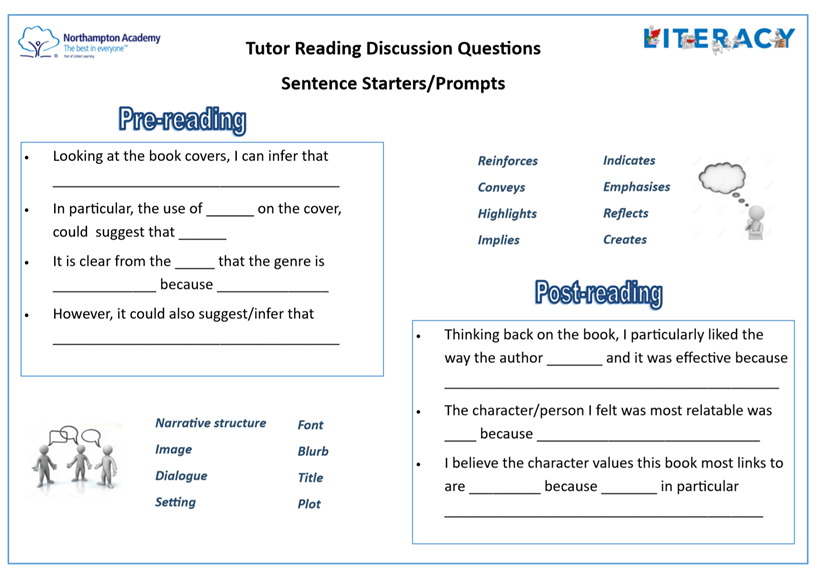
That’s where my discussion prompt cards come in, which I launched on our January INSET day. Every Tutor Group are to be given a set of A5 cards that have some sentence starters relating to the discussion questions already on the Knowledge Organisers (remember me saying how much I loved creating those….?!) I’ve kept these prompt cards generic rather than personalising them to each text and they are sectioned into the pre and post reading questions. Of course, the sentence starters aren’t exhaustive, but they are designed to provide a scaffold in enabling students to structure their verbal responses in a more considered and sophisticated way – to really think about how they want to construct a verbal opinion/argument. There’s also some analytical verbs (reinforces/conveys etc) on there to help them develop their vocabulary too.

This is an easy and natural ‘add on’ for the Tutor Reading Programme, rather than an additional task for teachers to ‘do’. In fact, it might even support those less confident members of staff I mentioned in my blog post on Tutor Reading. This will hopefully make the discussion more meaningful and productive. I would structure it like this – tell students to have a look at the discussion questions on the KO and think about some initial ideas, then have a chat in pairs/small groups using the cards to help communicate those ideas. Then I would open it up to whole class discussion, prompting students to use the sentence starters when sharing their thoughts. A teacher could even model the process first by sharing their own opinion using the prompt card.

It seemed to go down really well on INSET day and I even had a colleague ask me to email her the template so she could use it in her own lessons – so staff really are appreciating the benefits of literacy strategies in their own subject areas which is a huge personal win for me as I know so many teachers still see literacy as ‘just for English teachers’.

I look forward to observing these prompt cards in use over the coming half term and will report back with the results!

Creating a ‘whole school reading’ ethos – Part 2

In Part 1 of this post, I outlined how I launched our Tutor Reading Programme and how it’s developed since September 2018 as part of my role to create a ‘whole school reading’ ethos. I deliberately chose the picture of Spiderman as I really did feel like I’d need to harness my inner superpowers to deliver something as grand as a whole school positive approach to reading – which in our technology driven world – seemed like a near impossible task. Bearing in mind we have a high Pupil Premium intake and many of our students don’t have books at home or read for pleasure, I was hoping that my passion for reading would somehow magically transfer to our 1200+ students! (and staff of course…) I also felt empowered by what I think is perhaps the coolest job title in the land…..Reading Ambassador. I mean, that deserves a badge, right?!

So…how did I set out on my mission to convert teenagers into bibliophiles? Like all good teachers, I invested in some pretty stationery and made lots of lists. I also had a list on my phone for when inspiration ‘struck’ at random times. I knew I had to do something big – something whole school, something that would create a legacy and not just another flash in the pan. And then it came to me – 2018/19 was to be classed as the ‘Year of Reading’. I even had a logo made and got all staff to add it on to their email signature. It felt pretty cool and my plan was to have lots of reading events and strategies throughout the year. It was perfect to have alongside the launch of Tutor Reading and our expansion of the Accelerated Reader programme (extended to include Years 9 & 10) and DEAR Time (extended to include Year 10). I went into assemblies the first week of term to launch this with students and it really felt like I had got the ball rolling.

If your school doesn’t already use Accelerated Reader, I’d highly recommend it. It’s one of the easiest ways of seeing how much and how often students are reading. Also, if it’s run successfully by a fantastically dedicated librarian like ours, it is absolutely vital in creating positive attitudes towards reading and praising students for successes. We have lots of rewards – one of the most sought after being a popcorn and movie lesson for the class in each year group that has the most amount of students reaching their points target (some teachers, mentioning no names, get very competitive about this…!)

All of our students in Years 7-10 have a fortnightly English lesson in the library where they can dedicate the whole hour to reading and quizzing. (If only I could have the hour to read for myself as well!) English teachers use the time to look at the diagnostic reports and to have supportive conversations with those students not quizzing and those who are quizzing with poor results. They then use the rest of the time to listen to students read aloud. With my English teacher hat on (I seem to be acquiring a lot of hats lately…) it’s a unique opportunity to spend so much dedicated time on individual students and their reading. It’s especially lovely to hear students reading aloud to you and seeing how pleased they are with their progress. It can also be heart breaking to hear how they or their family members don’t read at home, but then that’s when I’m reminded of why I do this job.

DEAR Time has linked in really well with the expansion to include Year 10 as students see the reading time as working towards meeting their Accelerated Reader points target. It’s also vital element in getting staff involved. Our DEAR Time works on a tri-weekly rota: week 1, reading is the first 10 minutes of lesson 1 and 2, week 2 it’s lesson 3 & 4, then week 3 is lesson 5. Staff are expected to be reading during that time too – not planning, marking or checking emails. This is also monitored by SLT on duty. I personally love DEAR Time as it hits lessons across the curriculum, not just English, so students see it as a whole school thing. It’s also important for them to see their teachers (and not just English teachers) reading for pleasure. To further promote staff as reading models, I introduced the ‘I am Reading’ poster (template will be on my Resources page) which all staff display on their classroom door. It does exactly what it says on the tin – and the fact that students see these posters advertising their teachers’ current reading is extremely powerful.

So with these 3 core elements (Tutor Reading, Accelerated Reader, DEAR Time) already now in place, I could focus on events throughout the Year of Reading, many of which I could write an entire post on, but here they are in brief:

  • Macmillan Coffee Morning – with a literary twist. We held this in the library with staff baking and bringing in cake donations. The USP was ‘come and read books whilst eating cake and raising money for a worthwhile cause’ – I’d never seen the library so packed! I also managed to get the manager of our local WHSmith to donate an entire set of Harry Potter and Maze Runner books to raffle off to raise even more money. It was a great success!
  • Pizza Box Review – something I saw on Pinterest I think. Students use empty pizza boxes to write a book review. Again I used my skills of persuasion to get our local Domino’s to donate the pizza boxes, along with a gift voucher for the winner.
  • Readathon – an amazing charity (recently featured on Children in Need) that get students to raise money for reading books and the money raised provides storytellers and brand new books for children in hospitals. I launched this in assembly with their great promo video (available on YouTube) and our students raised more than £200! I really like the idea of linking reading to charity and this is something I’ll be running again this year. All the resources are free and the Readathon staff are so helpful and friendly – I’d really recommend doing this in your own school.
  • World Book Day – historically a big event at our school, with lots of free books being handed out to students during lunchtime and staff members dressing up as their favourite book characters (I chose Alice in Wonderland to twin with my eldest daughter!) I also linked in two other events – the Readathon and pizza box review deadline fell on World Book Day. We also had a short story being read over the tannoy throughout the day, a tradition that staff and students really enjoy.
  • LitFest – a whole school Literature Festival that ran in the second week of July. My amazing colleague – English KS3 Lead – set this up and left me to run it whilst going on maternity leave. It was a very stressful week but incredibly successful and immensely rewarding, a perfect celebratory end to our Year of Reading (I will dedicate a blog post to this for those of you interested in doing your own).
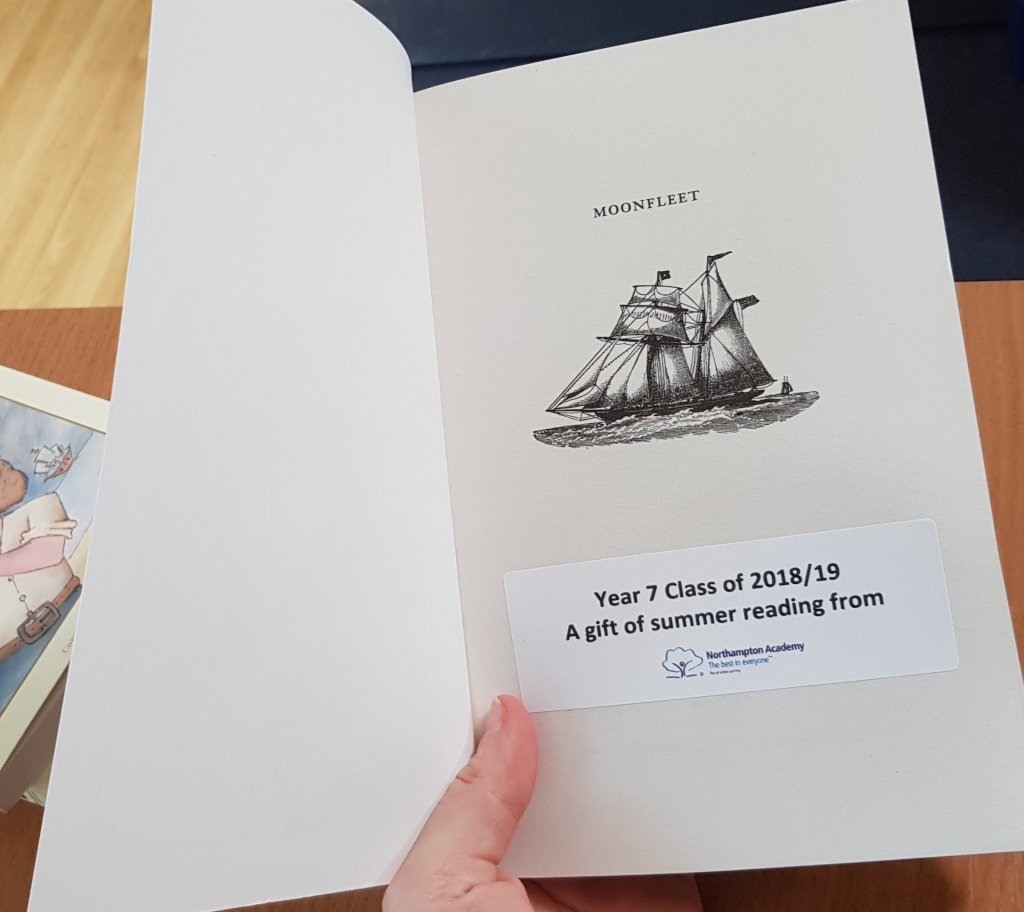
  • Gift of Summer Reading – I launched this in summer 2018 in which Year 6 students coming in for Transition Day all received a free book to take home and read over the summer holidays along with a letter for them and parents outlining the school’s vision and importance of reading – a key message for our newest intake. Summer 2019 saw this particular initiative combine with our LitFest as Transition Day fell on the first day of the week long festival. Year 6 were treated to a talk by Dan Freedman and then received a copy from his popular Jamie Johnson series to take home over summer. (more details on my LitFest blog post).

It’s safe to say that it was a busy but successful Year of Reading! Student surveys suggested that students enjoyed reading and were really positive about all the reading opportunities that the school gives them. Reading age data also showed a massive improvement over the year. And even though this academic year isn’t officially a ‘Year of Reading’, I’ve been continuing with many of the same events along with some new ones to continue the momentum and progress.

And have I managed to create a ‘whole school reading’ ethos? Well, I would like to think that every student and staff member now appreciates the value of reading and enjoys the time given in the school day and I’m excited to see what the future holds. As JK Rowling said: “I do believe something very magical can happen when you read a good book.”

Has ‘popcorn reading’ gone stale?

I’ve been doing a bit of reading up on something called ‘popcorn reading’ – a strategy used by many English teachers up and down the country. It’s seen as a way to ensure that every child reads. In its original format, the idea is that one student starts reading aloud, then when they’ve finished they say “popcorn” and nominate another student to continue with the reading. Seems pretty harmless and an easy way to make sure you get all your students to read, right?

Well, I adapted it slightly in my own teaching in terms of students don’t nominate, they simply say “popcorn” and it passes to the student sat next to them. I never liked the idea of students nominating each other as I was scared of it turning into students just nominating their friends, or more harshly, picking on weaker readers (maybe that’s just the cynical side of me?!) My way, I thought, gave each child a fair chance at reading. And for the less confident readers, they knew they only had to read the minimum of reading one line before being able to “popcorn”.

From experience, this way of whole class reading has always been an enjoyable experience. My classes – particularly Year 7 – come bounding through the door asking “are we popcorn reading today, miss?” followed by fist pumps in the air when I give a little nod. And I enjoy it too – there is no greater pleasure as an English teacher than enjoying reading a book aloud together.

However, having looked at it more deeply, and doing a bit of research, I’m inclined to think that as pleasurable as it may be – is it really helping my students to develop their reading skills? With my Literacy Co-ordinator hat on, I’m starting to think it’s a no.

So what are the alternatives? And do we have to get rid of the enjoyable element of whole class reading?

I’ve been looking at what Dr. Timothy Shanahan has to say on the matter and he quite rightly points out that during a ‘popcorn reading’ lesson, students only have a very small amount of reading and that quite often students will read ahead to make sure they are confident when reading their approaching line. This results in students actually losing the vital comprehension skills needed. Is it really acceptable to give students such a small amount of exposure to reading aloud? Instead, he suggests a paired reading approach. This allows each student more focussed time on reading to develop their skills, and also the valuable skill of re-reading a text, followed up by comprehension and discussion questions.

I can see how this would have a greater impact for students and allow much greater scope for improving reading confidence and ability. Also, in mixed ability classes it would be ideal for pairing up students based on ability. You could have 2 similar ability readers, or a pair where 1 student is stronger and therefore supports the weaker student. Also it’s perfect for EAL students as they can get more focused support rather than getting ‘lost’ in whole class reading.

The more I think about it, the more I’m liking the sound of it. I will be trialling this strategy in the new year, so please come back for an update!

Christmas is coming!

Christmas is always a busy time in school – it is also often the longest half term of the year. Teachers are tired, students are tired and it can feel like a slog just to make it to the holidays. However, it’s a really critical time of year for instilling that key Christmas spirit and what better way to do that then through the gift of reading.

My school is hosting its first ‘Winter Fair’ this year on the last day of term. Our students live in one of the most deprived areas in the county and we really want to make sure they feel like they’ve had a positive experience during such a pressurised time of year. Naturally I wanted to jump on the bandwagon to add a literacy element. The first thing that sprang to mind was to give them some festive reading material to enjoy over the 2 week break – and of course, what other novel could I choose than the most classic festive tale of all time – Dickens’ A Christmas Carol. I’ve also designed a festive bookmark with one of my favourite Dr. Seuss quotes of all time: ” Maybe Christmas, he thought, doesn’t come from a store. Maybe Christmas, perhaps, means a little bit more” – How The Grinch Stole Christmas.

Not only will they be receiving a gifted copy of the book, but I’m hoping it will encourage students to use the 2 week period to keep reading, and not lose the momentum that has been built up in school since September. 2 weeks is a long time and it’s important that students don’t lose key reading habits over the holiday. Of course, most things in schools needs to be ‘measured’ these days, and anything involved with reading is pretty hard to measure in terms of impact – from my experience anyway. What I intend to do in this case is to invite students to write a book review and perhaps do some sort of poll where I can gauge how many students actually read the book over the holidays. I’m concerned that this might just be disheartening though (I mean, what happens if no one reads it?!) This is where a reward system comes into play – offering students a reward for reading/reviewing the book. I think that’s my mind made up then. We’ll just have to wait and see what January brings!

And in the words of Dickens himself, ” “A Merry Christmas to us all; God bless us, every one!”